Call Now: 248-946-4000


Get a Quote
Our team can help you refine your scope and create a customized quote that meets your requirements. Fill out the form and we’ll be in touch.
From Blueprints to Bandwidth: How Networking Fits into New Construction
See how WZC Networking shapes new construction with ERCES compliance, cabling, Wi-Fi design, surveys, and inspection-ready installations.
The Hidden Lifeline of a Building
When people picture a new building, they imagine walls going up, concrete being poured, and finishes taking shape. What often gets neglected is the lifeline that will keep the entire space running once the doors open: the network. Connectivity is no longer an afterthought. It is as critical as plumbing or electricity, and it needs to be part of the project from the very first blueprint.
At WZC Networking, we work alongside architects, developers, and contractors to make sure every new building is wired, tested, and compliant before the first employee, student, or tenant moves in. Here’s how networking fits into the journey from plan to occupancy.
Step 1: Reading the Codes Before Breaking Ground
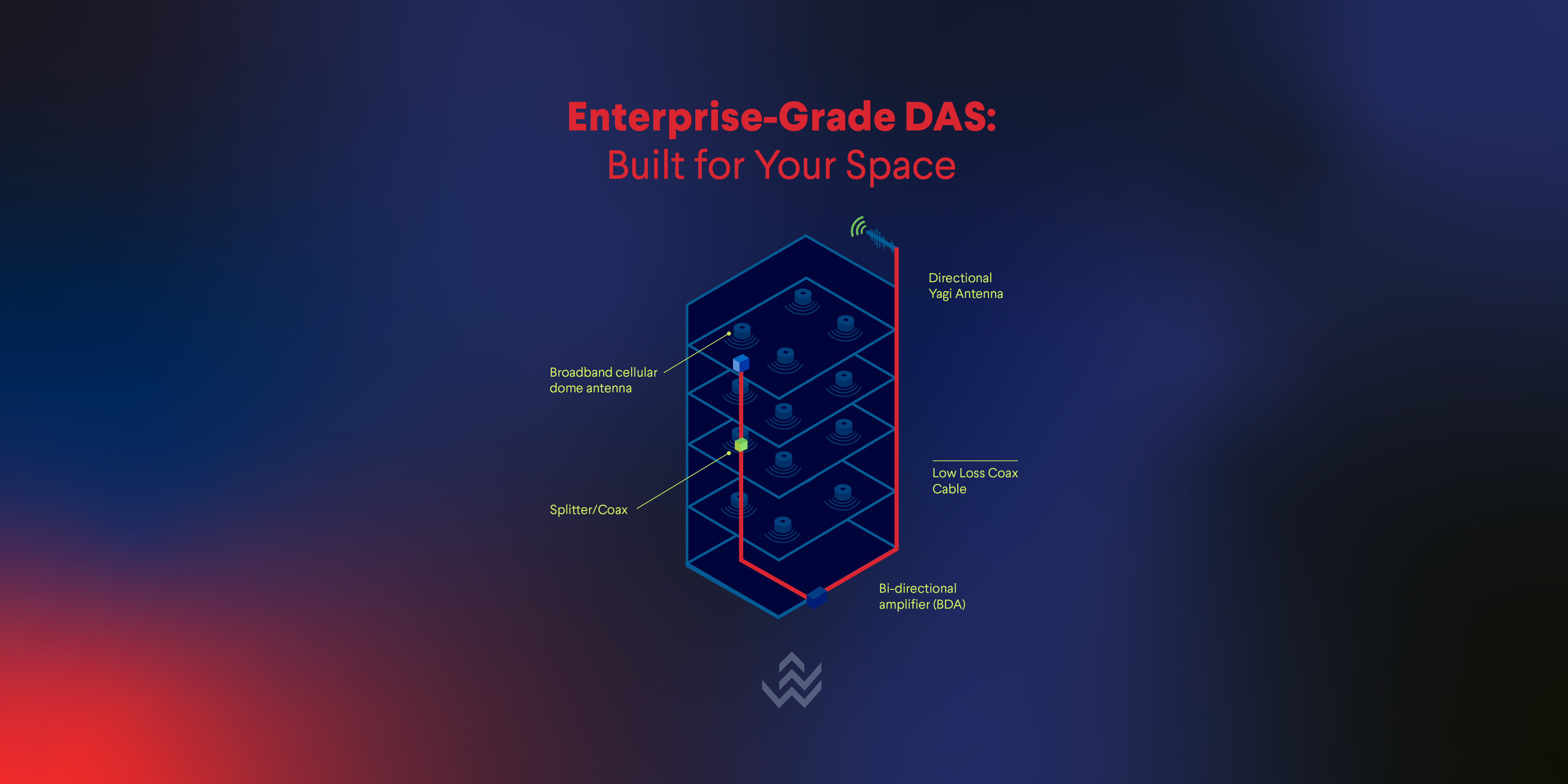
The first surprise for many builders is that wireless is tied to compliance. Fire marshals now enforce ERCES (Emergency Responder Radio Coverage) requirements in many jurisdictions. Without proof that first responders have reliable radio coverage inside the building, there is no Certificate of Occupancy.
Real Example: At Clawson Manor Co-Op Apartments in Michigan, WZC installed an ERCES DAS that passed inspection on the first attempt, preventing costly delays for residents and developers.
Step 2: Cabling and Pathways While the Walls Are Open
It is far cheaper and easier to pull cabling during construction than after drywall is up. IDF closets, conduit runs, and access point cabling must be placed early to support everything from Wi-Fi to security cameras. Leaving it as an afterthought often means ripping into finished walls or ceilings later.
Tip: Plan for growth. A building designed in 2025 will still be standing in 2040. Extra conduit and flexible IDF placement now can save a fortune in retrofits later.
Step 3: Predictive Design Meets Reality
Blueprints are a start, but wireless signals don’t always follow architectural lines. Predictive Wi-Fi models show how coverage should behave across rooms, corridors, and open spaces. Once the structure is framed, on-site surveys confirm the design and reveal how materials, layouts, and reflective surfaces affect the signal.
Real Example: At Rady Children’s Hospital in San Diego, WZC built predictive Wi-Fi models ahead of installation, ensuring reliable connectivity across critical care spaces and administrative areas before patients ever logged on.
Step 4: Installation and Integration
Once the design is locked, it is time to install. This includes mounting access points, configuring switches and controllers, labeling cabling, and connecting monitoring systems. Done right, installation is clean, documented, and tested against the performance promised in the plan.
Real Example: At SMART Bus transit terminals in Michigan, WZC deployed more than 70 indoor and outdoor access points across 500,000 square feet, complete with validation tests and staff training. By the time commuters arrived, the network was already proven under load.
Step 5: Testing, Training, and Turnover
The final stage is not just flipping a switch. A finished network requires end-to-end testing, from speed checks to emergency communication verification. It also includes staff training so facility teams know how to manage the system going forward.
WZC packages these steps with documentation, diagrams, and clear records, so owners and IT staff inherit a system they can maintain, not a mystery they have to decode.
Why Networking Needs a Seat at the Table
From day one, networking decisions influence construction. Skipping early planning can mean failed inspections, budget overruns, and frustrated tenants. Treating the network as a critical utility from blueprint to ribbon-cutting is the difference between a building that just stands and one that truly functions.
Key Takeaways for Developers and Contractors
- Budget ERCES testing and DAS design early to avoid failed inspections.
- Run cabling during construction, not after, and leave room for future expansion.
- Use predictive models and on-site surveys to prevent coverage gaps.
- Document everything so future IT teams can operate without guesswork.
- Test and train before handover to ensure a smooth transition at occupancy.
The journey from blueprints to bandwidth is about more than cables and access points. It is about making sure every tenant, customer, and emergency responder can rely on the network the moment they walk in. At WZCNetworking, we specialize in turning construction projects into connected spaces that are safe, compliant, and ready for the future.
Our Latest News

What Key Roles Does a Passive Wi-Fi Survey Play in Building Network Reliability?
Learn how passive Wi-Fi surveys help boost network performance, reduce downtime, and maintain connectivity.

Uncovering the Hidden Costs of Being Unprepared for ERCES Requirements
Avoid costly Non-Compliance of ERCES. Learn the hidden risks and key strategies to protect your business.

How Does Cellular Communication Benefit from Distributed Antenna Systems?
Distributed Antenna Systems (DAS) enhance cellular coverage and eliminate dead zones, ensuring seamless connectivity. WZC Networking can help implement a reliable, future-proof wireless network for your enterprise.
.png)


